
Skip the reading. Deploy this exact architecture and consolidate your B2B tech stack today.
Most SEO teams are already tracking keywords and auditing their own sites. The harder problem is knowing what your competitors are doing while you are doing it. That is where Opinly.ai enters the picture, offering competitive monitoring capabilities that, when wired correctly into your SEO workflow, can surface strategic gaps before they cost you rankings.
This blueprint is designed for practitioners who already understand the fundamentals of on-page optimization and want to operationalize competitive intelligence as a repeatable process. You will not find a basic introduction to SEO here. Instead, this post walks you through the full setup lifecycle, from configuring your Opinly.ai account and scoping your competitive monitoring targets, to integrating those insights into your content and technical workflows, and building a reporting cadence that keeps your strategy current.
Each phase builds on the last, so by the end you will have a documented system rather than a one-time audit. Whether you are managing SEO for a single domain or across multiple properties, the framework here is designed to scale with your program.
What Opinly.ai Does and How It Connects to SEO
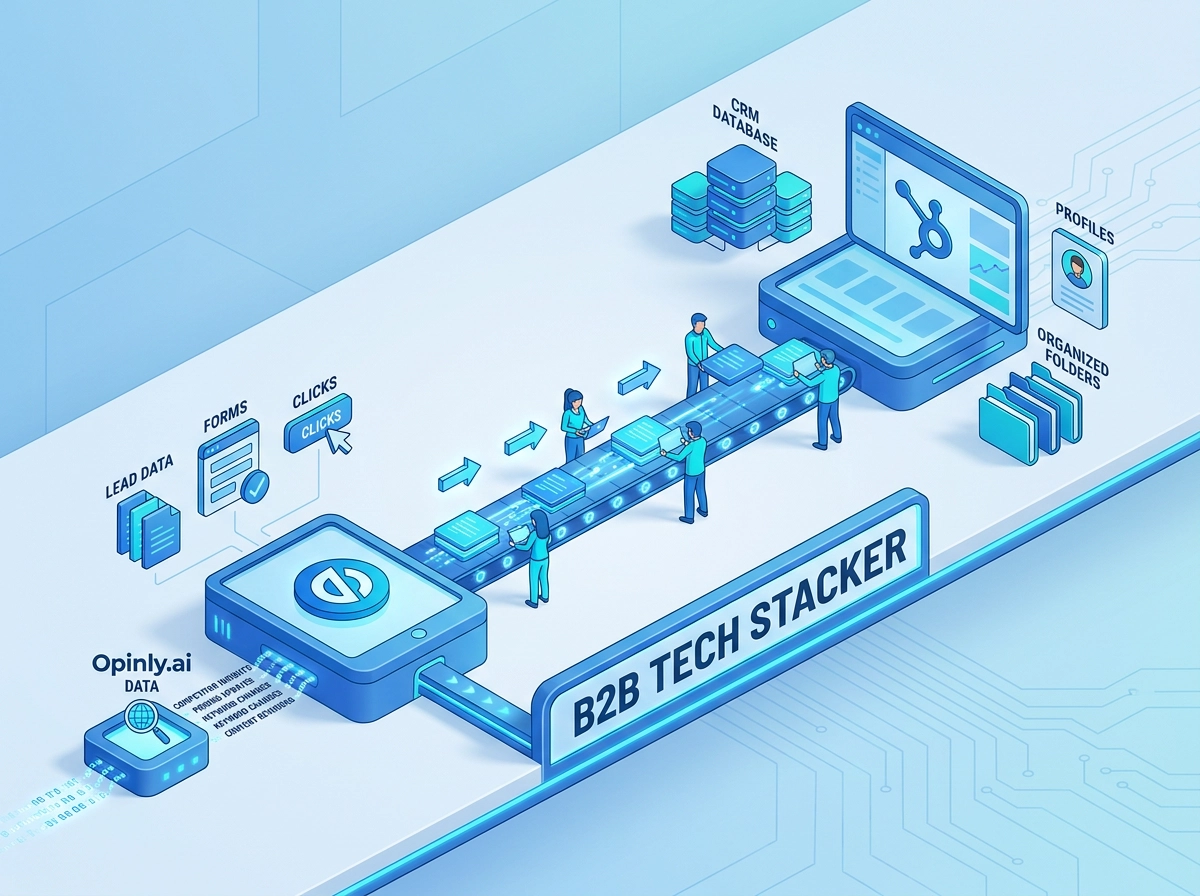
Opinly.ai is a competitive intelligence platform designed to surface competitor pricing, positioning, and content changes on an ongoing basis. Its SEO relevance is direct: every time a competitor revises a landing page, updates product copy, or expands a content cluster, that change carries keyword and intent signals you can act on.
Why this matters for SEO specifically:
- Competitor landing page revisions often reflect keyword strategy pivots. Detecting those changes lets you identify gaps in your own content before a ranking shift makes them obvious.
- Pricing page updates frequently introduce new terminology that searchers adopt. Monitoring that language gives you early targeting opportunities.
- New page publication on competitor domains signals topical authority moves. When a competitor launches a new content cluster, your window to respond with equal or greater depth is narrowest immediately after detection.
The practical difference between Opinly.ai and a standard SEO audit cycle is the trigger mechanism. Traditional audits run on a schedule, meaning competitive shifts that occur mid-cycle can go undetected until the next scheduled review. Opinly.ai inverts this: competitive changes become the trigger for SEO action, compressing the response window from months to days.
Before configuring any monitoring rules, visit https://opinly.ai/?ref=sky to walk through the live dashboard. Understanding the data surface area available, what change types the platform flags, what frequency options exist, and how alerts are structured gives you the context you need to make setup decisions deliberately rather than by default.
This positions Opinly.ai as an operational layer within a broader marketing infrastructure. If you are working through how intelligence tools like this fit into a larger system, the guide on how to build a marketing technology stack that actually performs covers the architectural logic for connecting tools at this level.
The sections that follow treat setup and management as a five-phase workflow. Start with a clear understanding of what the platform surfaces; everything downstream depends on it.
Prerequisites: What to Have in Place Before You Begin
Before you log into Opinly.ai and begin configuration, five operational inputs need to be in place. Skipping this groundwork produces noisy data, undefined response workflows, and monitoring programs that stall within weeks.
1. A defined competitor shortlist
Compile a focused shortlist of direct competitors whose organic search presence meaningfully overlaps with yours. Keep the list tight enough to sustain a disciplined review cadence. These should be domains competing for the same keywords, targeting the same buyer intent, and publishing in the same content verticals. Document this list before touching any tool settings.
2. A baseline keyword universe
You do not need a fully audited keyword program, but you need enough documentation to map incoming competitive signals to your existing ranking targets. A working list of priority keywords by page or content cluster is sufficient. Without it, Opinly.ai alert data has no anchor point, and you cannot determine whether a competitor’s content change is relevant to your SEO priorities or peripheral noise.
3. CMS access and execution capacity
Competitive intelligence only generates value when it triggers action. Confirm that the team member reviewing Opinly.ai data has either direct CMS access or a clear escalation path to publish content updates within a reasonable window. If implementation requires multiple approval cycles, build that timeline into your response workflow before monitoring begins. This is especially relevant for teams using more structured B2B software architecture blueprints to govern their publishing processes.
4. A designated workflow owner
Assign a specific person or role responsible for reviewing platform data on a recurring cadence and converting findings into SEO tasks. Unassigned data review creates accountability gaps where high-signal alerts get seen but never acted on.
5. Defined SEO KPIs
Establish your primary success metrics before data collection begins: organic traffic growth rate, keyword ranking movement on target terms, and content indexation rate are the most directly relevant benchmarks. These KPIs convert Opinly.ai outputs from observations into measurable performance inputs, so your program can demonstrate impact rather than just generate activity.
Phase 1: Account Setup and Dashboard Configuration
With your prerequisites documented and your competitor shortlist finalized, you are ready to initialize the platform itself.
Step 1: Create your account and complete onboarding
Navigate to Opinly.ai and register your account. The onboarding flow will prompt you to define your monitoring scope early; treat these options as structural decisions rather than defaults to click through. The scope you select here determines what data the platform collects from the start, so allocating five to ten minutes of deliberate review at this stage prevents reconfiguration work later.
Step 2: Set your primary domain as the anchor reference

Input your own domain as the primary reference point before adding any competitor URLs. This configuration tells the platform to frame all competitive intelligence relative to your website’s positioning, rather than surfacing data in a vacuum. Without this step, change alerts and positioning signals lack the relational context your SEO workflow needs to generate actionable responses.
Step 3: Configure monitoring frequency
Set alert cadences before adding competitors. Daily alerts suit fast-moving markets where competitor content velocity is high and keyword positions shift frequently. Weekly digests work for more stable competitive environments where monitoring noise is a greater risk than delayed detection. Frequency settings affect downstream workload significantly, so align this decision with the workflow cadence your assigned team owner can realistically sustain. This mirrors the discipline required when building an integrated sales and marketing workflow where automation cadence directly determines team capacity.
Step 4: Customize your dashboard for SEO-relevant signals
Configure the dashboard to prioritize three signal types: content change alerts, pricing positioning shifts, and new page detection on competitor domains. These three categories map most directly to SEO response actions. Surface these prominently so your weekly review session starts with the highest-signal data rather than requiring manual filtering.
Step 5: Route alerts to the right team members
Use notification settings to distribute alerts by type rather than funneling everything into a single inbox. Assign content change alerts to your SEO or content lead, pricing shifts to whoever owns conversion-page copy, and new page detection to whoever manages your content gap analysis. Distributed routing accelerates response time and prevents a single-inbox bottleneck from becoming the rate-limiting factor in your workflow.
Phase 2: Defining Your Competitive Monitoring Scope
With your dashboard configured, the next step is deciding precisely what to monitor and why. Indiscriminate domain-level monitoring is the fastest route to alert fatigue; structured scope is what separates a functioning intelligence pipeline from a noise generator.
Segment Your Competitors Before You Input Them
In Opinly.ai, group your shortlisted competitors into three distinct categories before adding them:
- Direct product competitors: Brands targeting the same buyer with comparable offerings. These demand the highest monitoring priority and the tightest alert rules.
- Content competitors: Sites that compete for the same keyword surface area but may not sell a directly comparable product. Monitor for content publishing patterns and structural changes.
- Adjacent-market players: Brands operating in neighboring categories that occasionally overlap with your keyword targets. Lower-frequency monitoring is appropriate here.
Each category requires a different response cadence, so the segmentation step belongs in setup, not after data starts flowing.
Target High-Signal Pages, Not Entire Domains
For each competitor, identify and monitor specific page types rather than their full domain. Category pages, pillar content, pricing pages, and feature comparison pages carry the highest SEO signal because they reveal how competitors are positioning against search intent. These pages, covered in the SEO and search visibility category, concentrate the competitive moves worth tracking.
Configure Change-Specific Monitoring Rules
Build monitoring rules around event types rather than general activity:
- New page publication: Signals topic expansion or a content gap response.
- Page-level copy revisions: Often indicates keyword targeting adjustments or messaging pivots.
- Navigation restructuring: Signals a broader information architecture or positioning change.
This granularity lets Opinly.ai surface only the changes that require an SEO decision.
Document Intent Before Data Arrives
For every monitored competitor and page type, log a single sentence explaining the SEO reason for monitoring it, alongside the predefined response action. When an alert fires, the decision is already made. This eliminates the ad hoc triage that kills response time.
Narrow scope deliberately. Monitoring fewer pages with clear intent generates faster, cleaner action than broad coverage with undefined response criteria.
Phase 3: Connecting Competitive Insights to Your SEO Workflow
With your monitoring scope configured, the next step is ensuring every signal Opinly.ai surfaces translates directly into an SEO action rather than sitting in an inbox as unprocessed data.
Build Your Alert-to-Action Translation Layer
Map each alert category to a predefined SEO response before data starts flowing. This removes decision latency from the process:
- New competitor page detected: Trigger a keyword gap review against that URL’s apparent topic target
- Content revision on a monitored page: Schedule a content depth audit on your equivalent page promptly, ideally within the same weekly review cycle
- Pricing page change: Flag for conversion copy and keyword language review
Without this mapping, the same alert type will generate inconsistent responses across team members and review cycles.
Treat Competitor Content Signals as Content Audit Triggers
When Opinly.ai detects a competitor publishing into a topic cluster you already target, use that as a signal that your existing coverage may have gaps in depth, supporting subtopics, or freshness. Pull the relevant page from your site, run a content depth assessment against what the competitor has published, and update or expand accordingly. Defending existing topical positions is faster than building new ones.
Extract Keyword Intelligence from Pricing Page Changes
Competitors rarely change pricing page copy without a strategic reason. New benefit language, reframed feature descriptions, and updated tier names reflect how a market segment is beginning to describe value. Those phrases may surface in search queries before they appear in conventional keyword research data. Monitor these changes through Opinly.ai and feed the new terminology directly into your conversion page copy and keyword targeting. For building out the broader keyword universe around those signals, a structured keyword research workflow provides the analytical layer to validate search volume and difficulty.
Convert Content Gaps into Prioritized Briefs
Use accumulating monitoring data to surface topic areas where competitors are building authority and your site has no indexed coverage. These represent direct threats to future organic visibility. Assign each identified gap a content brief and prioritize by the competitive velocity you are observing, not just search volume estimates.
Document Every Triggered Action
Log the SEO action each alert type produced, who handled it, and the time from alert to published change. This documentation converts a reactive process into a repeatable playbook, making the workflow transferable across team members and sustainable as your competitive monitoring scope grows.
Phase 4: Establishing Your Ongoing Management Cadence
With your playbook mapped in Phase 3, the next challenge is consistency. Competitive intelligence loses its value when it accumulates unreviewed, so this phase defines the recurring rhythms that keep SEO & Search Visibility work grounded in current market data.
Weekly: 30-Minute Review Session
Each week, open your Opinly.ai dashboard and work through a fixed agenda in sequence: new competitor pages detected, copy-level changes on monitored pages, and positioning updates. Run these three passes in order and stop at 30 minutes regardless. A time-boxed session enforces prioritization; open-ended reviews drift into analysis paralysis.
Monthly: Pattern-Level Competitive Audit
Once per month, aggregate the prior four weeks of Opinly.ai signals rather than reviewing individual alerts. The questions to answer are directional: which competitors increased content publishing frequency, and which topic clusters are accumulating new competitive entries? A single alert is a data point; four weeks of alerts is a pattern that should inform your content sprint planning.
Quarterly: Scope Revision
Every quarter, audit your monitored competitor list against current market reality. Add any entrants who have begun competing for your target keywords. Remove competitors whose content and positioning have drifted outside your SEO overlap. A static competitor list monitors yesterday’s landscape, not today’s.
Alert Triage Framework
Apply three priority levels to every Opinly.ai alert:
- High-priority: Competitor launches a page directly targeting your primary keyword targets. Warrants an SEO response before the next scheduled review session.
- Medium-priority: Content revision or structural change on a monitored page. Queue for the next sprint cycle.
- Low-priority: Minor copy edits or peripheral page changes. Log for quarterly review only.
Continuity: Assign a Secondary Reviewer
Designate a backup reviewer before the workflow goes live. When the primary owner is unavailable, monitoring should not pause. Brief the secondary reviewer on the triage framework and dashboard navigation so handoff requires no real-time knowledge transfer.
Phase 5: Building Your Reporting and Iteration Framework
With your management cadence running, the next layer is closing the feedback loop: turning Opinly.ai monitoring data into measurable SEO outcomes and continuously sharpening the system that produces it.
Monthly Reporting Template
Build a single reporting document that maps each Opinly.ai alert category to a corresponding SEO outcome. For every monitoring-triggered action your team took during the month, record the alert type, the SEO response executed, and the ranking or traffic change observed in the weeks following the action. This correlation log does not prove causation, but it surfaces patterns that justify future resource allocation and validates which alert types are generating real SEO leverage.
Alert Response Rate Tracking
Add two operational metrics to your monthly report. First, response rate: the percentage of flagged competitive changes that resulted in a concrete SEO action. Second, time-to-publish: the average number of days from alert receipt to a live change on your own site. A high response rate paired with a long time-to-publish may point to a content production bottleneck. A consistently low response rate is worth examining, common causes include alert fatigue or a monitoring scope that doesn’t align closely enough with active SEO priorities. Both metrics are actionable diagnostics, not vanity numbers.
Signal Quality Iteration Cycles
Review alert output monthly and flag categories that consistently land as low-priority. If a specific alert type, such as minor competitor copy edits below a certain threshold, generates noise without producing SEO actions, reconfigure the monitoring scope to filter or deprioritize it. Tighter signal configuration accelerates your team’s response time on the alerts that actually matter.
Stakeholder Framing: SEO Velocity
When presenting findings to stakeholders, frame competitive intelligence as an SEO velocity indicator: the speed at which your team identifies and responds to competitive shifts directly determines your ability to defend existing keyword positions or capture emerging ones. Slow response time is a strategic liability, not just an operational inefficiency. Quantified response rates give leadership a concrete proxy for program effectiveness.
Quarterly Platform Review
Every quarter, revisit your full workflow configuration at Opinly.ai. New platform features can improve monitoring precision or unlock reporting capabilities that were unavailable when you first configured your setup. Treating the platform as static means leaving accuracy gains on the table.
Common Setup Mistakes to Avoid
Even a well-configured reporting framework will underperform if the underlying setup contains structural errors. These are the five mistakes that most consistently break workflow automation programs built around competitive intelligence.
Over-monitoring competitors from day one. Adding every relevant competitor at setup creates alert volume that desensitizes your team before the workflow is established. Research on alert fatigue in monitoring systems confirms that excessive signal volume causes reviewers to miss critical information. Start with a small initial set of your highest-priority direct competitors. Expand only after your review cadence is running without friction.
Skipping the alert-to-action mapping step. Configuring Opinly.ai to send alerts without first defining what each alert type requires produces a decision bottleneck on every notification. As covered in Phase 2, pre-mapping alert types to response actions before data flows prevents decision bottlenecks on every notification.
Treating the workflow as a reporting function. Competitive intelligence that gets collected, summarized, and filed in a report has no operational value. Every data point surfaced in Opinly.ai needs a named response owner and a defined action pathway. If no one is accountable for acting on a signal, the workflow stalls regardless of data quality.
Letting your competitor list go stale. Markets shift, and your monitored competitor list should shift with them, quarterly scope reviews keep your monitoring targeting current threats, not past ones.
Skipping workflow documentation during setup. A setup that exists only in the memory of whoever configured it is a fragile setup. When that person changes roles or leaves, the logic behind alert configurations, scope decisions, and response mappings disappears with them. Document every configuration decision at the time you make it, not retrospectively.
Each of these errors is avoidable with deliberate setup discipline. The structural choices you make before data starts flowing through Opinly.ai determine whether your team responds to signals or just receives them.
Advanced Tips for Maximizing SEO Value from Opinly.ai
Once your workflow is running cleanly and common pitfalls are behind you, these techniques extract deeper SEO intelligence from the monitoring data you are already collecting.
Cross-reference page change timing against ranking shifts. When Opinly.ai flags a competitor page update, log the date and check your own ranking positions for shared keywords in the same window. Repeated correlations between their changes and your SERP movement reveal which competitor pages carry the most ranking influence in your space, letting you prioritize response actions by actual impact rather than assumption.
Treat publishing velocity as a keyword competition signal. When two or more tracked competitors begin publishing within the same topic cluster in a short window, that convergence may signal rising competition intensity, sometimes before keyword difficulty scores reflect the shift. Respond by deepening your existing content on those topics rather than waiting for traditional keyword research data to confirm the trend.
Mine pricing page copy for pre-emergence keyword signals. Competitors update pricing and feature pages to reflect language that their sales and support teams are hearing directly from buyers. As noted earlier, those new phrases may appear in search queries before keyword tools confirm volume, making early-mover content worth testing. Pairing these signals with a keyword research workflow lets you build content around emerging queries ahead of the competitive curve.
Use publishing frequency as a content calendar benchmark. Pull competitor publishing cadence data from Opinly.ai and map it against your own output rate by topic area. If competitors are consistently outpacing you in a shared cluster, that gap belongs in your editorial planning as a quantified production target, not a vague concern.
Treat navigation restructuring as a strategic pivot signal. When a competitor renames core product pages or reorganizes their site architecture, that change frequently reflects a deliberate repositioning effort. Those structural shifts carry SEO intent behind them: new page names target different queries, and revised navigation hierarchies signal which topic areas they are now prioritizing for organic growth. Flag these changes for analysis before your rankings register the downstream effects.
Conclusion: Run a Smarter SEO Program with Competitive Intelligence
The advanced tactics covered above only deliver value if the underlying workflow infrastructure is solid. That foundation is what this blueprint was built to establish.
The five-phase workflow moves in a deliberate sequence: account setup and dashboard configuration, competitive monitoring scope definition, SEO workflow integration, ongoing management cadence, and reporting and iteration. Each phase depends on the previous one functioning cleanly. Skipping ahead creates gaps that surface later as inconsistent data, unactioned alerts, or reporting that cannot be tied to outcomes.
The core principle running through every phase is this: competitive intelligence only improves SEO performance when it operates as a continuous input loop. Quarterly research exercises produce snapshots. Continuous monitoring produces a signal stream that keeps your content and keyword strategy aligned with real-time market movement.
The practical value of Opinly.ai in this context is not the volume of data it surfaces. It is the speed and consistency with which that data generates specific, assigned actions on your own site.
Start with a single-phase deployment, not a full rollout. Attempting to configure monitoring scope, build response workflows, assign triage frameworks, and establish reporting templates in the same week introduces too many variables before any single component is validated.
Your Week 1 directive is precise: complete Phase 1 and Phase 2 only. Get your Opinly.ai account configured, set your monitoring frequency, and define your initial competitor scope. Do not build the response workflow yet. Let the monitoring run for several days, review the alert output, and verify the signal quality matches your SEO priorities. Only once the monitoring layer is producing clean, relevant data should you move into Phase 3 and connect those outputs to your SEO task queue.
Build the system in sequence. Each phase you complete correctly reduces the complexity of every phase that follows.