
Skip the reading. Deploy this exact architecture and consolidate your B2B tech stack today.
Introduction: The Imperative for Streamlined Operations
In the rapidly evolving landscape of modern business operations, organizations are constantly seeking innovative methodologies to enhance efficiency, reduce manual errors, and accelerate data collection processes. The digital age has brought about an unprecedented volume of information that must be gathered, processed, and analyzed on a daily basis. From customer feedback and lead generation to internal employee surveys and complex operational audits, data is the lifeblood of strategic decision-making. However, many enterprises still find themselves bogged down by fragmented systems, manual data entry, and inefficient communication channels. This is where the power of modern software solutions comes into play, offering a transformative approach to how businesses handle their information ecosystems. By adopting comprehensive, no-code data collection platforms, companies can transcend traditional limitations, bridging the gap between data acquisition and actionable insights. Jotform has emerged as a leader in this space, providing a versatile, robust, and intuitive platform that empowers users across all technical skill levels to build, deploy, and manage sophisticated forms and workflows.
The Hidden Costs of Fragmented Data Systems
To truly understand the value of a unified data collection strategy, one must first examine the hidden costs associated with fragmented systems. In many organizations, different departments rely on disparate tools to gather information. The marketing team might use one application for event registrations, while human resources relies on an entirely different platform for employee onboarding. This siloed approach inherently creates friction. When data is isolated, it becomes incredibly difficult to gain a holistic view of the organization’s performance. Furthermore, manual data transfer between these disjointed systems often leads to transcription errors, delayed responses, and a significant drain on employee productivity. The time spent exporting, formatting, and re-uploading data into secondary systems represents countless hours of lost labor—time that could be better spent on high-level strategic initiatives. By centralizing these processes into a single, cohesive platform, businesses can eliminate these inefficiencies. This not only reduces the administrative burden on staff but also ensures that data remains accurate, secure, and readily accessible to authorized personnel across the organization.
Automating Workflows for Peak Efficiency
Automation is no longer a futuristic concept reserved for highly technical enterprises; it is a fundamental requirement for maintaining a competitive edge in today’s fast-paced market. Workflow automation takes the manual effort out of repetitive tasks, ensuring that processes move smoothly from one stage to the next without requiring human intervention. When a form is submitted, what happens next? Does it sit in an inbox waiting for approval, or does it automatically trigger a sequence of actions? With advanced workflow automation, a single submission can instantly notify a manager, update a central database, generate a custom PDF report, and send a personalized confirmation email to the respondent. This level of orchestration ensures that nothing falls through the cracks and that response times are drastically reduced.

By mapping out standard operating procedures and digitizing them through automated workflows, organizations can enforce consistency and compliance. Whether dealing with complex multi-step approval processes for purchase requests or simply routing customer inquiries to the appropriate department, automation minimizes bottlenecks. It empowers teams to focus on exceptions and complex problem-solving rather than mundane administrative routing, fundamentally shifting the workforce’s focus from execution to strategy.
Empowering Collaboration with Dedicated Team Features
Data collection is rarely a solitary endeavor. It typically requires the collaborative effort of multiple team members, from the initial design of the form to the subsequent analysis of the gathered data. Traditional form builders often struggle with team dynamics, offering limited access controls or forcing users to share login credentials—a significant security risk. A truly enterprise-ready solution must provide robust team collaboration features that allow multiple users to work together securely and efficiently.

Through dedicated workspaces, administrators can assign specific roles and permissions to different team members, ensuring that individuals only have access to the information and tools necessary for their specific function. Marketing teams can collaborate on campaign lead capture forms, while finance teams securely manage expense reporting structures. This shared environment not only enhances security but also fosters a culture of transparency and shared responsibility. Changes are tracked, version control is maintained, and teams can communicate seamlessly within the context of the data they are managing, breaking down the traditional barriers that hinder cross-functional collaboration.
Seamless Web Integration: The WordPress Connection
A data collection strategy is only as effective as its deployment. Forms must be presented to users precisely where they are interacting with the brand. For millions of businesses, that primary point of interaction is their company website, which is overwhelmingly powered by platforms like WordPress. The ability to seamlessly embed sophisticated, highly customized forms directly into a WordPress site without writing a single line of code is a game-changer for webmasters and digital marketers alike.

This integration goes beyond simple embed codes. It involves ensuring that forms are fully responsive, adapting flawlessly to desktop, tablet, and mobile viewing environments. Furthermore, embedded forms must maintain the brand’s aesthetic, utilizing customizable CSS and dynamic themes to blend naturally with the surrounding website content. By reducing friction at the point of data entry, businesses can significantly increase conversion rates, capturing more leads, registering more attendees, and gathering more comprehensive feedback directly from their primary digital storefront.
Bridging Communication Gaps with Microsoft Teams
In the era of remote and hybrid work, internal communication platforms have become the central nervous system of the enterprise. Microsoft Teams, in particular, has seen massive adoption, serving as the primary hub for chat, meetings, and collaborative document editing. Integrating data collection processes directly into this communication hub ensures that critical information reaches the right people at the right time, minimizing the delay between data capture and actionable response.
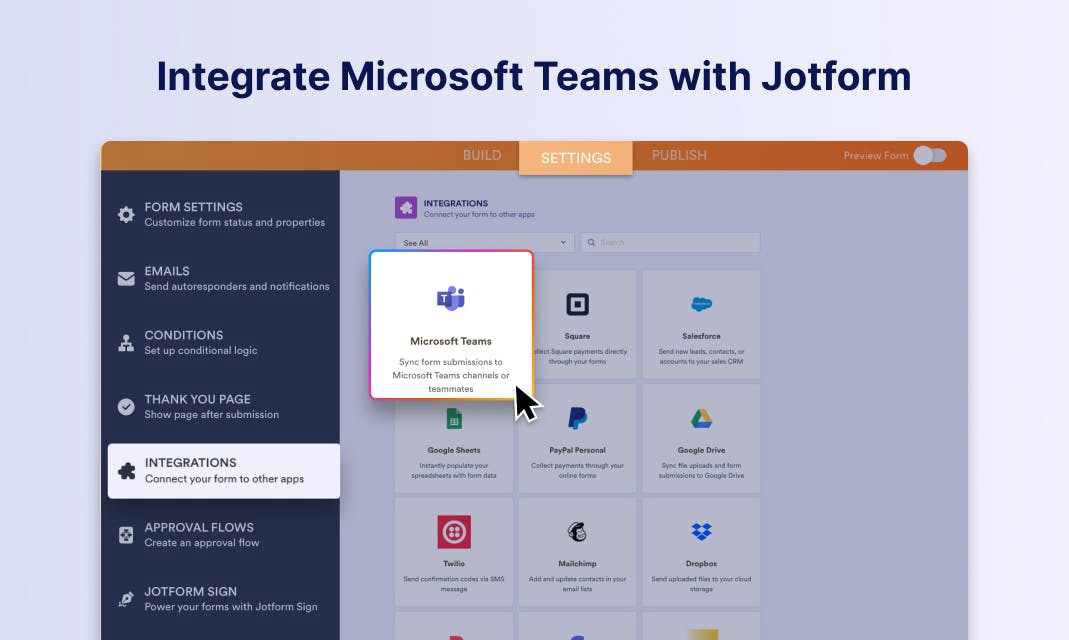
Imagine a scenario where a high-priority customer support ticket is submitted via a web form. Rather than sitting in an email inbox, the submission instantly triggers a notification in a dedicated Microsoft Teams channel, complete with all relevant details and attachments. The support team can immediately discuss the issue, assign a representative, and begin working on a resolution without ever leaving their primary workspace. This level of integration collapses response times, improves team visibility, and ensures that critical alerts are never missed amidst the noise of a busy workday.
Advanced Security and Compliance Standards
As organizations collect increasingly sensitive information, the burden of data security and regulatory compliance becomes paramount. Businesses operating in healthcare, finance, or global markets must adhere to strict frameworks such as HIPAA, GDPR, and CCPA. A reliable data collection platform must not only facilitate the gathering of information but also guarantee its protection throughout the entire lifecycle. This requires enterprise-grade encryption, both in transit and at rest, alongside comprehensive audit logs and physical server security.
Choosing a platform that prioritizes compliance ensures that businesses can confidently collect sensitive data—such as patient medical histories or detailed financial records—without exposing themselves to catastrophic legal and reputational risks. Features like automated data retention policies, secure localized data centers, and advanced user authentication methods provide peace of mind for IT administrators and compliance officers. In a world where data breaches are increasingly common, robust security is not an optional add-on; it is the foundational requirement upon which all modern business operations must be built.
Evaluating the Return on Investment
When considering the adoption of a comprehensive workflow and data collection platform, decision-makers must evaluate the tangible return on investment. The initial costs associated with software licensing are rapidly offset by the substantial savings in administrative labor, reduction in manual errors, and accelerated process cycles. By freeing up highly skilled employees from rote data entry tasks, organizations can redirect their human capital toward innovation and growth initiatives.
Furthermore, the scalability of modern solutions ensures that the software can grow alongside the business. Flexible Pricing structures allow companies to start with the features they need today and seamlessly upgrade their capabilities as their data volume and operational complexity increase. This adaptable approach guarantees that the platform remains a valuable asset, delivering continuous ROI well into the future.
Conclusion: Embracing the Future of Operations
In conclusion, the modernization of business workflows through advanced, no-code data collection is a strategic imperative for any organization aiming to thrive in the digital era. By dismantling data silos, automating repetitive tasks, and fostering seamless integration with existing tools like Microsoft Teams and WordPress, companies can unlock unprecedented levels of efficiency and agility. The journey toward operational excellence requires a commitment to continuous improvement and the adoption of technologies that empower employees rather than hinder them. Platforms like Jotform provide the necessary infrastructure to realize this vision, offering a comprehensive suite of tools designed to streamline every aspect of data management. As we look to the future, businesses that leverage these capabilities will undoubtedly hold a distinct competitive advantage, characterized by faster decision-making, enhanced collaboration, and a relentless focus on strategic growth.
Expanding the Possibilities with Conditional Logic
One of the most powerful features that elevates standard data collection into the realm of intelligent workflow management is advanced conditional logic. Traditional paper forms or basic digital surveys present a static experience—every respondent sees the exact same questions regardless of their previous answers. This often leads to user fatigue, lower completion rates, and the collection of irrelevant data. Intelligent forms, on the other hand, dynamically adapt in real-time based on user input. If a respondent indicates they are a returning customer, the form can instantly skip introductory questions and instead present fields tailored to gathering feedback on their recent experiences. Conversely, a new prospect can be guided down a completely different path, capturing detailed demographic and qualification information. This dynamic branching not only creates a significantly smoother and more engaging user experience but also ensures that organizations capture precisely the data they need, precisely when they need it, without burdening the user with unnecessary inquiries. The backend benefits are equally profound; by filtering data at the point of entry, backend processing and analysis become markedly more efficient, as datasets are cleaner, highly relevant, and pre-categorized according to the logic rules established during the form’s creation.
Harnessing Data for Strategic Growth
Ultimately, the objective of gathering data is not merely to store it, but to harness it for actionable insights and strategic growth. Once workflows are automated and integrations are functioning seamlessly, businesses are left with a rich repository of structured information. The ability to quickly translate this raw data into visual reports, dashboards, and analytical summaries is crucial. Modern platforms offer built-in reporting tools that allow managers to track submission trends, measure campaign effectiveness, and identify operational bottlenecks at a glance. By democratizing access to data analytics, organizations empower department heads to make evidence-based decisions swiftly, pivoting strategies based on real-time feedback rather than relying on outdated quarterly reviews. This continuous feedback loop—facilitated by intelligent data collection and automated distribution—is the hallmark of an agile, forward-thinking enterprise ready to navigate the complexities of tomorrow’s market.